Industrial Prototyping Services in India: How to Find the Right Local Manufacturing Partner
December 29, 2025 • Cracent
Every hardware startup faces a critical moment: transforming a validated concept into a tangible prototype that proves the product can work in the real world. Yet, many founders discover too late that finding reliable industrial prototyping companies in India is far more challenging than anticipated. The wrong manufacturing partner can drain your runway, delay your timeline by months, and deliver prototypes that fail to meet specifications.
For Indian startups, local manufacturing prototyping services offer distinct advantages, including cost efficiency, faster iteration cycles, and the ability to oversee production firsthand. However, India's fragmented manufacturing landscape makes identifying qualified, trustworthy vendors a complex challenge that requires strategic evaluation.
This blog explains what industrial prototyping truly entails, why choosing the right local manufacturing partner is make-or-break for startups, the common pitfalls founders encounter when sourcing vendors, and a practical framework for identifying and working with mechanical prototyping services that can actually deliver on your product vision.
What Is Industrial Prototyping and Why It's Different from Product Design
Industrial prototyping is the process of creating functional, near-production versions of your product to validate design, test performance, and identify manufacturing constraints before committing to mass production. Unlike conceptual prototypes or 3D-printed models, industrial prototypes use real manufacturing processes like CNC machining, injection molding, sheet metal fabrication, or PCB assembly.
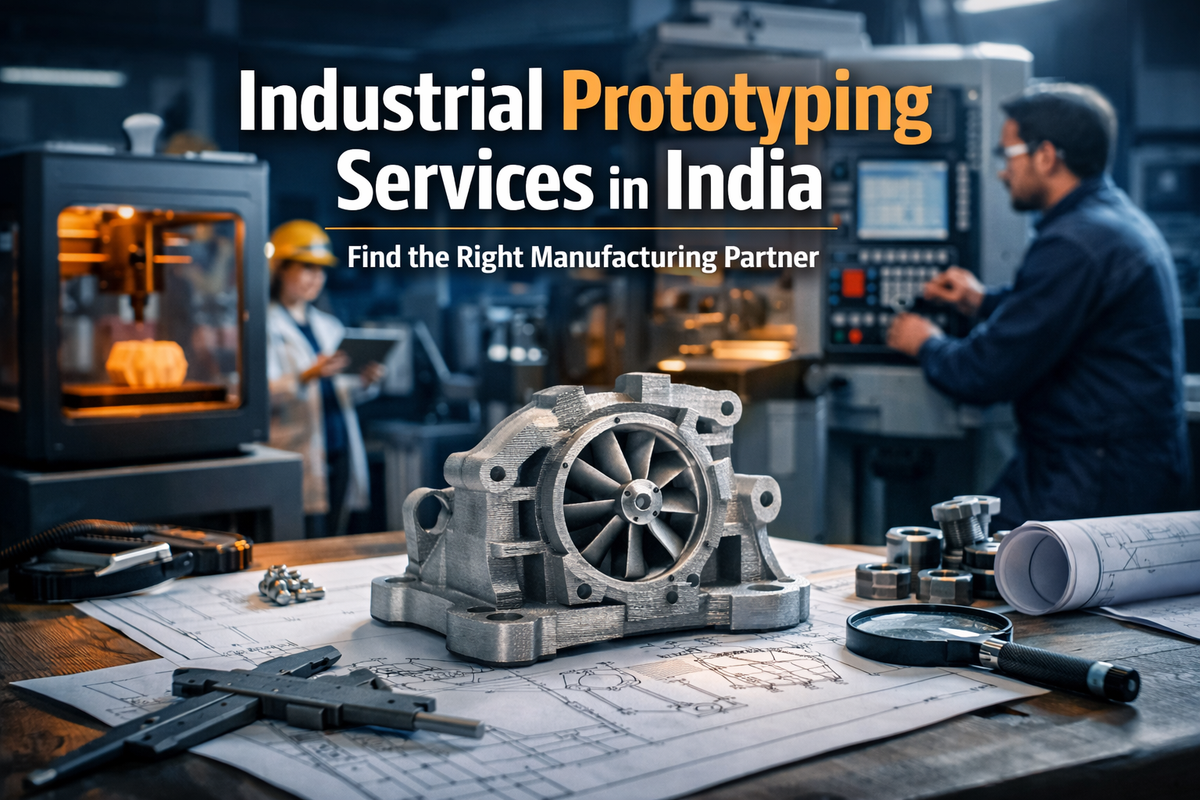
Think of it as a dress rehearsal before opening night. Your CAD designs might look perfect on screen, but industrial prototypes reveal how materials behave under stress, whether assembly is practical, and if your design can actually be manufactured at your target cost.
Product prototyping in India bridges the gap between engineering drawings and scalable production. It exposes issues with tolerances, material selection, surface finishes, and assembly complexity that can only be discovered through hands-on manufacturing. For startups, this phase is critical because it validates not just if your product works, but if it can be built reliably and economically at scale.
Why Finding the Right Local Manufacturing Partner Matters More for Startups
Startups operate under constraints that established companies don't face. You have limited capital, aggressive timelines, and typically only one shot to get manufacturing right before investor confidence or runway runs out. Choosing the wrong prototyping partner doesn't just slow you down, it can be existential.
Local manufacturing vendors in India offer proximity advantages that international alternatives can't match. You can visit facilities, inspect prototypes in person, iterate quickly without waiting weeks for international shipping, and build relationships that enable flexible payment terms or priority treatment as you scale.
However, India's manufacturing ecosystem is highly fragmented. Quality varies dramatically between vendors, communication standards differ, and many smaller shops lack formal project management or documentation practices. A vendor who excels at one manufacturing process may be completely unsuitable for another. Without proper vetting, startups often waste months and lakhs on partners who cannot deliver functional prototypes or who disappear mid-project.
The right partner becomes a strategic asset who understands startup constraints, can suggest cost-saving design modifications, and grows with you from prototype to production. The wrong partner derails your entire timeline and forces expensive redesigns or facility changes at the worst possible moment.
Common Mistakes Startups Make When Sourcing Prototyping Partners
Choosing Based on Price Alone
The cheapest quote is rarely the best value. Low-cost vendors often cut corners on materials, processes, or quality control, that results in prototypes that don't meet specifications. Founders then spend additional money fixing issues or re-prototyping elsewhere, ultimately paying more than if they had chosen a qualified partner initially. Price matters, but capability, reliability, and quality should drive your decision.
Not Verifying Technical Capabilities and Past Work
Many manufacturing shops list capabilities on their websites that they've only attempted once or cannot execute consistently. Startups often fail to request samples of previous work, visit facilities, or verify certifications and equipment. This results in partnerships with vendors who lack the machinery, expertise, or capacity to deliver your specific prototype requirements, leading to failed builds and wasted time.
Skipping Clear Documentation and Specifications
Founders frequently approach manufacturers with vague requirements, incomplete CAD files, or without clear success criteria. This communication gap leads to prototypes that technically match what was requested but fail to meet the founder's actual needs. Without detailed specifications covering materials, tolerances, finishes, testing requirements, and acceptance criteria, disputes arise and iterations multiply unnecessarily.
Ignoring Manufacturing Lead Times and Capacity Constraints
Startups often assume prototyping happens quickly, but mechanical prototyping services have lead times that vary by process and current workload. Founders commit to investor timelines or pilot programs without confirming vendor availability, only to discover their partner is backlogged for weeks or lacks capacity for urgent iterations. Understanding realistic timelines and your vendor's bandwidth prevents missed milestones and last-minute scrambling.
Failing to Plan for Iteration and Scalability
The first prototype rarely works perfectly. Startups make the mistake of treating prototyping as a one-time transaction rather than an iterative partnership. They don't discuss how changes will be handled, what iteration costs look like, or whether the vendor can eventually scale to production volumes. This short-term thinking forces facility changes later, losing institutional knowledge and restarting vendor relationships when you can least afford it.
The Process of Finding and Evaluating Industrial Prototyping Companies in India
Define Your Exact Prototyping Requirements
Before approaching any vendor, document precisely what you need. Specify the manufacturing processes required for CNC machining, injection molding, sheet metal work, PCB assembly, and other needs. Identify materials, quantities, tolerances, surface finishes, and any special requirements like certifications or testing. Create a clear statement of work that leaves no ambiguity about deliverables, timelines, and success criteria.
Source Multiple Candidates Through Strategic Channels
Don't rely solely on Google searches or online directories. Attend manufacturing trade shows and industry events where you can meet vendors directly. Leverage founder networks and startup communities to get referrals from those who've successfully prototyped similar products. Use platforms like IndiaMart or TradeIndia cautiously, verifying credentials carefully. Consider working with manufacturing enablement platforms that pre-vet vendors and manage the partnership on your behalf.
Conduct Thorough Technical Due Diligence
Visit shortlisted facilities in person whenever possible. Inspect their equipment, cleanliness, organization, and workflow. Request samples of past work similar to your requirements and speak with previous clients if possible. Verify certifications like ISO standards, industry-specific accreditations, or quality management systems. Ask detailed questions about their processes, materials sourcing, quality control procedures, and how they handle design modifications or issues.
Evaluate Communication and Project Management Capabilities
Technical capability means nothing if communication breaks down. Assess how responsive vendors are during initial conversations. Do they ask intelligent questions about your project? Can they provide clear timelines and milestone breakdowns? Do they use formal documentation like quotes, contracts, and progress reports? Poor communication during sourcing predicts major issues during execution.
Start with Small Test Projects Before Full Commitment
Rather than committing your entire prototype build to an untested vendor, start with a smaller, less critical component or a proof-of-concept build. This test project reveals how they handle real work, their actual lead times versus promises, quality consistency, and how they respond to feedback or changes. Only after successful completion of a test engagement should you entrust them with your complete prototype build.
How to Manage the Prototyping Partnership for Success
Establish Clear Contracts and Intellectual Property Protection
Formalize your partnership with written agreements covering deliverables, timelines, payment terms, quality standards, and IP ownership. Ensure NDAs are in place before sharing proprietary designs. Indian manufacturing partners range from highly professional firms with standard contracts to informal shops operating on verbal agreements. Always insist on documentation that protects your interests and provides recourse if issues arise.
Maintain Active Project Oversight and Regular Communication
Don't just hand off designs and wait for delivery. Schedule regular check-ins to review progress, see work-in-progress photos or videos, and address questions immediately. Being accessible and responsive to your vendor's questions prevents assumptions that lead to mistakes. Active involvement demonstrates your commitment and often results in better attention and priority from the manufacturer.
Build in Buffer Time and Plan for Iteration
Prototyping almost never goes perfectly on the first attempt. Build realistic timelines that include buffer for unexpected issues, iterations based on testing results, and time for design refinements. Discuss with your vendor upfront how changes will be handled, typical iteration timelines, and associated costs so there are no surprises when modifications are needed.
Leverage Local Presence for Quality Control
One of the primary advantages of product prototyping India offers is proximity. Use this by conducting in-person inspections at key milestones, particularly before final delivery. Catching issues while parts are still at the facility allows immediate corrections rather than discovering problems after shipping. Physical presence also strengthens relationships and gives you insight into their operations that remote management cannot provide.
Industrial Prototyping in the Indian and Global Context
India's Growing Manufacturing Ecosystem and Startup Advantages
India's manufacturing sector is experiencing significant transformation driven by government initiatives like Make in India, improved infrastructure, and growing technical expertise. For startups, this means expanding access to increasingly sophisticated manufacturing prototyping services at costs significantly lower than Western markets. Cities like Bangalore, Pune, Ahmedabad, and Delhi NCR host clusters of capable vendors specializing in various manufacturing domains.
However, Indian startups must navigate challenges including inconsistent quality standards across vendors, varying levels of professionalism, and the fragmented nature of the supplier base. Unlike China's integrated manufacturing ecosystems, Indian facilities often specialize narrowly, requiring startups to coordinate multiple vendors for complex products. Understanding these dynamics is essential for realistic planning and successful execution.
Meeting Global Quality Standards from Local Manufacturing
If your product targets international markets or requires compliance with global standards, ensure your prototyping partner can meet these requirements from the start. Certifications like ISO 9001, ISO 13485 for medical devices, or industry-specific standards matter greatly. Many Indian industrial prototyping companies in India now operate at world-class quality levels, but verification is essential rather than assumed.
Document everything meticulously, maintain strict change control, and implement quality inspection protocols that match your eventual production standards. Prototypes should validate not just functionality but also your ability to manufacture at the quality level your market demands. Starting with lower standards and trying to improve later rarely succeeds and always costs more.
How Cracent Helps Startups with Industrial Prototyping Services
Cracent bridges the gap between product concepts and reliable industrial prototypes by connecting startups with vetted, qualified local manufacturing vendors across India. Rather than spending months sourcing, vetting, and managing multiple prototyping partners, Cracent provides a single platform that handles the entire prototyping journey from vendor selection through delivery.
By pre-qualifying mechanical prototyping services based on technical capabilities, quality standards, and track record, Cracent ensures startups work with partners who can actually deliver on their requirements. The platform manages project coordination, quality oversight, and communication, reducing the burden on founders while ensuring timelines and specifications are met.
Cracent's integrated approach means startups benefit from local manufacturing advantages including cost efficiency and rapid iteration while avoiding the typical pitfalls of fragmented vendor management. As products move from prototype to production, Cracent's vendor network and project infrastructure scale with you, eliminating the need to restart manufacturing relationships at critical growth stages.
Conclusion
Finding the right industrial prototyping partner in India is one of the most consequential decisions hardware startups make. The difference between a qualified, reliable vendor and a poor choice measures in months of timeline, lakhs of capital, and potentially your product's entire trajectory.
Success requires moving beyond price-focused selection to strategic evaluation of technical capability, quality consistency, communication standards, and long-term partnership potential. Investing time in thorough vetting, starting with test projects, and maintaining active oversight throughout the prototyping phase prevents the costly mistakes that derail too many hardware startups.
The goal isn't just to build one prototype, it's to establish a manufacturing partnership that validates your product design, proves scalability, and positions you for successful transition to production. With India's growing manufacturing ecosystem and the right approach to vendor selection, startups can access world-class prototyping capabilities that turn innovative ideas into market-ready products.
🚀 Building a Hardware Product?
Cracent helps startups transform ideas into manufacturable, scalable products through structured R&D, vetted manufacturing partnerships, expert prototyping oversight, and end-to-end production support.
📩 Get in touch with Cracent:
- Website: www.cracent.com
- Email: info@cracent.com
- LinkedIn: Cracent
Disclaimer
Cracent provides engineering, design, and manufacturing enablement services. Final manufacturing outcomes depend on supplier capabilities and project requirements.