How to Find Reliable Manufacturing Vendors in India: A Startup's Guide to Choosing the Right Partner
January 5, 2026 • Cracent
For hardware startups and businesses scaling production, finding a reliable manufacturing vendor in India can be the difference between success and costly failure. India's manufacturing ecosystem offers immense potential with competitive costs, skilled labor, and growing infrastructure, but navigating this landscape without the right approach often leads to quality issues, delivery delays, and unexpected expenses that can drain runway and damage investor confidence.
The challenge isn't just finding a manufacturer, it's finding the right manufacturing partner who understands your specifications, maintains consistent quality, scales with your growth, and operates with transparency. Many startups learn this lesson the hard way, discovering critical issues only after committing significant capital and time.
This comprehensive guide walks you through the entire process of identifying, evaluating, and partnering with reliable manufacturing vendors in India. From understanding what makes a vendor trustworthy to conducting due diligence and building sustainable relationships, you'll learn how to avoid common pitfalls and make informed decisions that protect your startup's future.
What Makes a Manufacturing Vendor "Reliable"?
Reliability in manufacturing goes far beyond producing parts that meet specifications. A truly reliable vendor is one who consistently delivers quality products on time, communicates transparently about challenges, maintains financial stability, and demonstrates the capability to scale with your business needs.
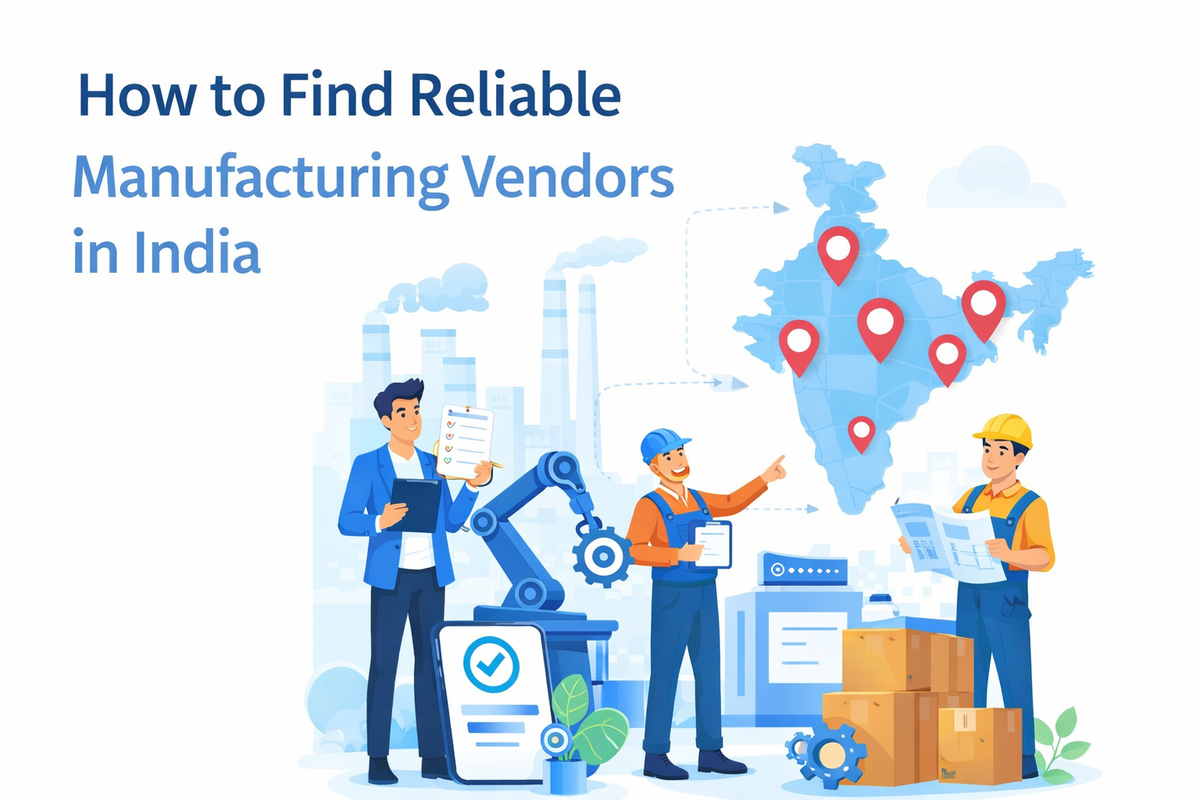
Think of your manufacturing vendor as a long-term business partner, not just a supplier. Just as you wouldn't hire a critical team member without thorough vetting, you shouldn't commit to a manufacturing relationship without understanding their operational maturity, quality systems, and track record.
Key reliability indicators include consistent quality control processes, proven experience with similar products or industries, transparent pricing and lead times, proper certifications and compliance standards, financial stability, and responsive communication. Many startups focus solely on cost and capability during vendor selection, only to face disruptions when a cheap vendor misses deadlines, delivers inconsistent quality, or lacks the capacity to scale production when demand increases.
A reliable vendor should also demonstrate problem-solving capability. Manufacturing always involves challenges, whether it's material shortages, design modifications, or quality issues. The difference between a reliable and unreliable vendor often becomes apparent in how they handle these inevitable obstacles. The best partners flag issues early, propose solutions proactively, and work collaboratively to maintain project momentum.
Why Vendor Selection Is Critical for Startups
For startups operating with limited capital and tight timelines, choosing the wrong manufacturing vendor can be catastrophic. Unlike established companies with diversified supply chains and financial buffers, startups typically can't afford costly mistakes, production delays, or quality issues that damage their market reputation before they've even established themselves.
Every dollar matters in the early stages. A vendor who underquotes to win your business but later increases prices, delivers substandard products requiring rework, or misses critical launch deadlines can consume your entire budget and push you back months or even years. Investors scrutinize manufacturing partnerships closely because they understand that operational execution often determines whether a hardware startup succeeds or fails.
Beyond financial risk, your manufacturing vendor directly impacts your ability to iterate quickly and respond to market feedback. Startups need partners who can accommodate design changes, produce small to medium batch sizes economically, and scale production smoothly as demand grows. Vendors accustomed only to high-volume production may not provide the flexibility startups require during early stages.
Your vendor choice also affects product quality and brand reputation. In today's market, one viral complaint about product defects can damage a startup irreparably. Your manufacturing partner's quality standards, attention to detail, and commitment to excellence directly reflect on your brand, making vendor reliability not just an operational concern but a strategic business priority.
Common Mistakes Startups Make When Choosing Vendors
Focusing Exclusively on Cost
The most common mistake startups make is selecting vendors based primarily on the lowest quote. While cost management is essential, the cheapest option rarely delivers the best value. Low quotes often hide compromises in quality, materials, certifications, or service levels that create expensive problems later. A vendor quoting significantly below market rates may lack proper equipment, cut corners on quality control, or operate with financial instability that puts your production at risk.
Skipping Proper Due Diligence
Many startups, eager to start production quickly, skip thorough vendor evaluation. They accept marketing materials and verbal assurances at face value without conducting factory visits, checking references, or verifying capabilities. This rushed approach often leads to discovering critical gaps in vendor capability after signing contracts and making deposits, when it's too late or expensive to change partners.
Ignoring Communication and Cultural Fit
Manufacturing requires constant communication about specifications, timelines, quality issues, and changes. Startups often underestimate how important clear, responsive communication is to successful vendor relationships. Language barriers, time zone differences, poor responsiveness, or different business cultures can create misunderstandings that lead to costly errors, delays, and frustration.
Not Planning for Scale
Some startups find vendors perfect for prototyping or initial small batches but discover too late that the vendor lacks capacity, systems, or capability to scale production when demand increases. This forces startups to switch vendors during critical growth phases, requiring new tooling investments, requalification processes, and risking supply disruptions that can lose customers and market opportunity.
The Vendor Discovery and Evaluation Process (Step-by-Step)
Step 1: Define Your Requirements Clearly
Before approaching any vendor, create detailed specifications covering your product requirements, quality standards, volume projections, budget constraints, and timeline expectations. Include technical drawings, material specifications, tolerance requirements, certifications needed, packaging requirements, and any special considerations. The clearer your requirements, the better vendors can assess fit and provide accurate quotes.
Also define your ideal vendor profile. Consider factors like preferred location, minimum quality certifications, experience with similar products, production capacity, and technical capabilities required. This clarity helps you focus your search on appropriate vendors rather than wasting time with mismatched partners.
Step 2: Source Potential Vendors
Use multiple channels to build your vendor shortlist. Industry networks and trade associations often provide trusted referrals. Online platforms and directories like IndiaMART, TradeIndia, and industry-specific databases offer searchable vendor listings. Industry trade shows and manufacturing expos let you meet vendors directly and see sample work.
Leverage your professional network including investors, mentors, other founders, and industry experts who may have manufacturing experience and vendor recommendations. Consider working with sourcing consultants or platforms like Cracent that maintain vetted vendor networks and can match your requirements to appropriate partners.
Step 3: Initial Screening and RFQ Process
Create a Request for Quotation (RFQ) document that clearly outlines your requirements, volumes, quality standards, timeline, and evaluation criteria. Send this to your shortlisted vendors and evaluate responses not just on price but on how thoroughly they address your requirements, their questions and clarifications, their proposed timeline and payment terms, and the professionalism of their response.
Initial screening should filter vendors based on relevant experience, appropriate scale and capacity, necessary certifications, communication quality, and reasonable pricing that's neither suspiciously low nor excessively high. Aim to narrow your list to three to five vendors for deeper evaluation.
Step 4: Conduct Factory Visits and Audits
For your top vendor candidates, conduct in-person factory visits. Nothing replaces seeing manufacturing facilities firsthand. During visits, assess facility cleanliness and organization, quality control systems and equipment, production capacity and machinery conditions, worker training and working conditions, inventory and material management systems, and compliance with safety and environmental standards.
Ask to see similar products they've manufactured, discuss their quality control processes in detail, review their testing capabilities and equipment, understand their supply chain and material sourcing, and meet the team who would work on your project. Pay attention to how transparently they answer questions and whether they seem genuinely capable of meeting your requirements.
Step 5: Check References and Track Record
Request and actually contact references from current and past clients, especially those with similar products or requirements. Ask about quality consistency, ability to meet deadlines, handling of problems or issues, communication and responsiveness, flexibility with changes or special requests, and whether they would work with the vendor again.
Research the vendor's business history, financial stability, and reputation. Check for any legal issues, labor disputes, or regulatory violations. Review their client portfolio and look for signs of stability like long-term relationships with reputable companies.
Step 6: Request Samples and Run Trials
Before committing to full production, request samples or run a paid trial production of a small batch. This lets you verify the vendor's quality standards, production capabilities, adherence to specifications, and how they handle feedback and corrections. Evaluate samples rigorously against your specifications and quality standards.
Use trial runs to also assess the vendor's project management, communication during production, handling of issues or changes, and final product quality. This investment in validation before full commitment can save enormous costs and headaches later.
How to Build Strong, Long-Term Vendor Relationships
Finding a reliable vendor is just the beginning. Successful manufacturing partnerships require ongoing relationship management. Start by establishing clear communication protocols including regular check-ins, designated points of contact, and transparent sharing of schedules, forecasts, and changes.
Treat your vendors as partners, not just suppliers. Pay invoices on time, provide reasonable lead times for orders, communicate changes as early as possible, and acknowledge good work. Vendors prioritize customers who treat them well, providing better service, flexibility, and pricing to valued partners.
Invest in relationship building beyond transactional interactions. Visit periodically, understand their challenges and constraints, celebrate successes together, and look for ways the partnership can be mutually beneficial. Strong relationships create resilience when problems arise and give you priority treatment during capacity constraints.
Implement performance tracking and regular reviews. Monitor quality metrics, delivery performance, communication responsiveness, and flexibility. Provide constructive feedback and work collaboratively on continuous improvement. Address issues promptly and professionally before they become major problems.
India-Specific Considerations for Manufacturing Vendor Selection
India's manufacturing landscape offers unique advantages and challenges. The country provides competitive labor costs, growing technical expertise, improving infrastructure, and a large domestic market. However, startups must navigate considerations specific to the Indian context.
Regional variations matter significantly. Different states and industrial clusters specialize in different manufacturing capabilities. For example, Tamil Nadu has strong automotive and electronics manufacturing, Maharashtra offers diverse industrial capabilities, Gujarat excels in chemicals and textiles, while Karnataka and Telangana are strong in technology and precision manufacturing. Understanding these regional strengths helps you target your vendor search effectively.
Regulatory compliance and certifications vary by industry and export requirements. Ensure your vendor has or can obtain necessary certifications like ISO standards, Bureau of Indian Standards (BIS) certifications for applicable products, export certifications if you're shipping internationally, and industry-specific quality standards. Compliance issues can halt production or create legal problems, so verify credentials thoroughly.
Infrastructure and logistics considerations impact lead times and costs. Assess the vendor's proximity to ports for exports, access to reliable power and water, connectivity to transportation networks, and local supplier ecosystems. These factors affect not just manufacturing efficiency but your total landed costs and supply chain reliability.
How Cracent Helps Startups Find and Work with Reliable Manufacturing Vendors
Cracent eliminates the complexity and risk of vendor discovery by providing startups with access to a curated network of vetted, reliable manufacturing partners across India. Rather than spending months searching, evaluating, and taking risks on unknown vendors, startups can leverage Cracent's existing relationships with manufacturers who have been pre-qualified for quality, capability, reliability, and ethical business practices.
Beyond vendor matching, Cracent manages the entire manufacturing engagement from initial requirements definition through production and quality assurance. This includes facilitating technical discussions and negotiations, managing communication and project timelines, conducting quality inspections and compliance verification, and providing visibility and accountability throughout the manufacturing process.
By serving as a trusted intermediary with manufacturing expertise, Cracent protects startups from common vendor selection mistakes while accelerating time-to-production. Startups gain confidence knowing their manufacturing partners have been thoroughly vetted and that experienced professionals are overseeing their production, allowing founders to focus on product development, market validation, and business growth rather than manufacturing operations management.
Conclusion
Finding reliable manufacturing vendors in India is one of the most critical decisions hardware startups make, directly impacting product quality, costs, timelines, and ultimately business success. While India offers tremendous manufacturing potential, navigating this ecosystem requires structured evaluation, thorough due diligence, and understanding of what truly makes a vendor reliable beyond just competitive pricing.
The startups that succeed are those who approach vendor selection strategically, investing time upfront in proper evaluation, conducting thorough factory visits and reference checks, starting with trials before full commitment, and building genuine partnerships with their manufacturing vendors. This proactive approach prevents the costly mistakes, quality disasters, and timeline disasters that derail underprepared startups.
With the right vendor partner and proper relationship management, startups can turn India's manufacturing capabilities into a competitive advantage, producing high-quality products efficiently while maintaining the flexibility to iterate, scale, and respond to market demands confidently.
🚀 Need Help Finding the Right Manufacturing Partner?
Cracent connects startups with vetted, reliable manufacturing vendors in India and manages the entire production journey from vendor selection to quality assurance and delivery.
📩 Get in touch with Cracent:
- Website: cracent.com
- Email: info@cracent.com
- LinkedIn: Cracent
Disclaimer
Cracent provides engineering, design, and manufacturing enablement services. Final manufacturing outcomes depend on supplier capabilities and project requirements. Vendor recommendations are based on evaluation at time of engagement and do not guarantee specific production results.